Physical Address
304 North Cardinal St.
Dorchester Center, MA 02124
Physical Address
304 North Cardinal St.
Dorchester Center, MA 02124
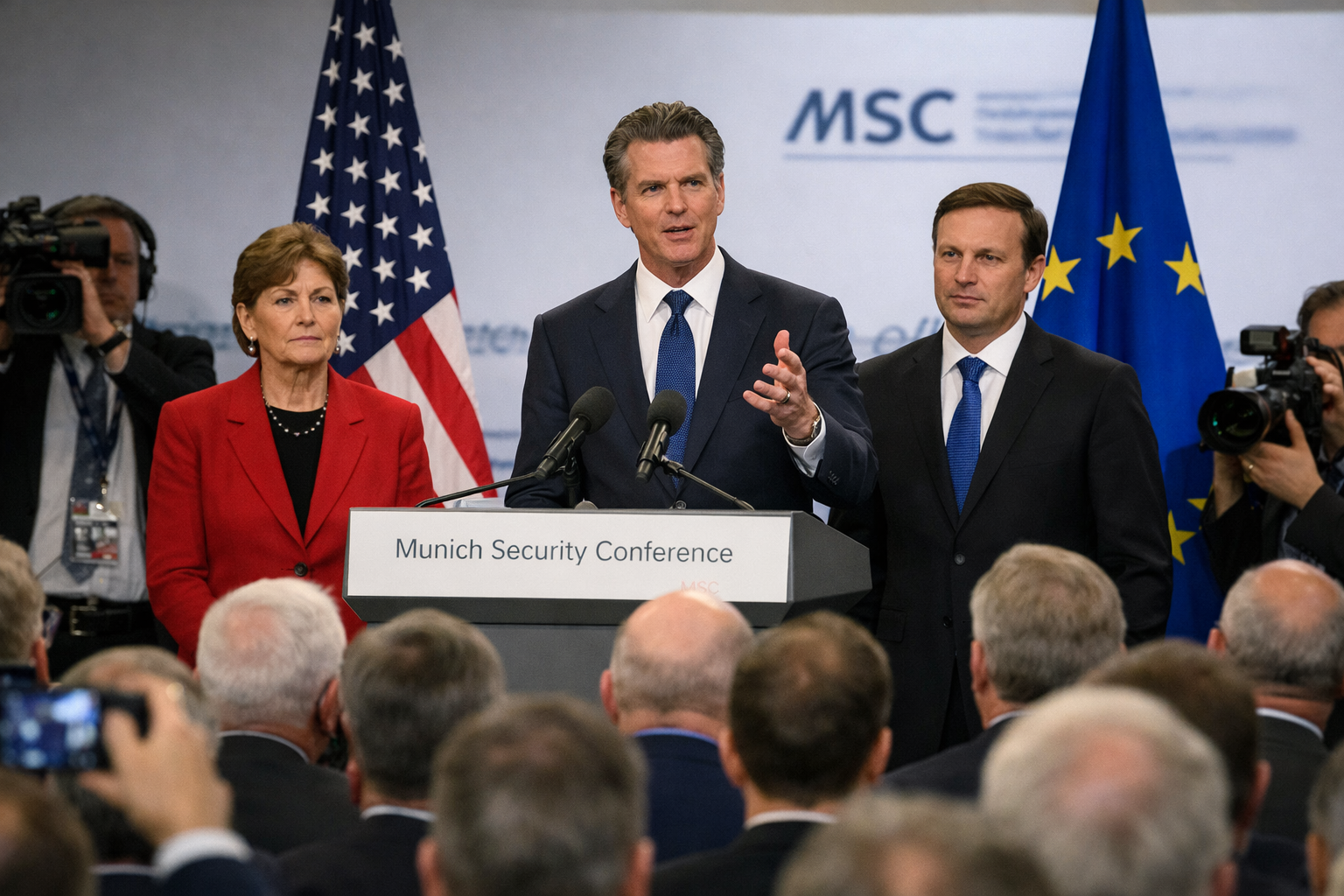
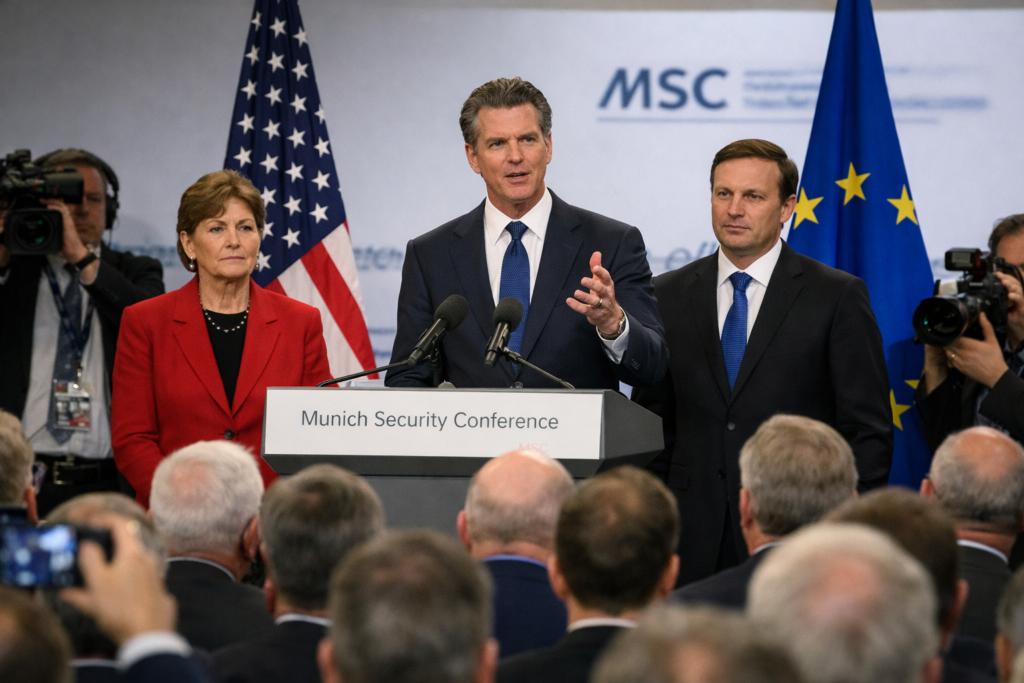
In Munich, prominent leaders from the U.S. Democratic Party tried to soothe growing jitters among European allies over Washington’s foreign policy direction under Donald Trump’s presidency. Their message was clear: while current U.S.–Europe relations face strain, the partnership that has anchored transatlantic security for decades will endure — and this period of tension is temporary.
Speaking at side events and panels at the 2026 Munich Security Conference, California Governor Gavin Newsom — a leading Democratic voice and possible future presidential contender — offered a blunt reassurance to anxious European officials and audiences. “Donald Trump is temporary. He’ll be gone in three years,” Newsom said, suggesting that the prospects of a different U.S. political direction could reassure long‑standing partners shaken by recent policy shifts.
While U.S. Secretary of State Marco Rubio centered much of the main plenary address on the durability of the transatlantic alliance, including shared history and strategic cooperation, Democrats in attendance chose to underscore a contrast with the current administration’s rhetoric and actions. Their remarks often emphasized democratic norms, climate policy, and continued support for multilateral institutions.
European reactions to these assurances have been mixed. Some leaders welcomed the reaffirmations of commitment from U.S. lawmakers, while others pointed to the need for Europe to assert increasing autonomy in defense and economic strategy. The backdrop to these discussions includes continued disagreement over tariffs, global security priorities, and the U.S. national security strategy’s sometimes critical portrayal of European policies.
Despite their different approaches, both American and European policymakers at the Munich conference repeatedly acknowledged the importance of the enduring NATO partnership and the shared challenges that lie ahead — from defense modernization to geopolitical competition and global crises.
This political dialogue reflects growing uncertainty in Western alliances but also underlines how critical these exchanges remain in navigating 21st‑century security and diplomatic challenges.